


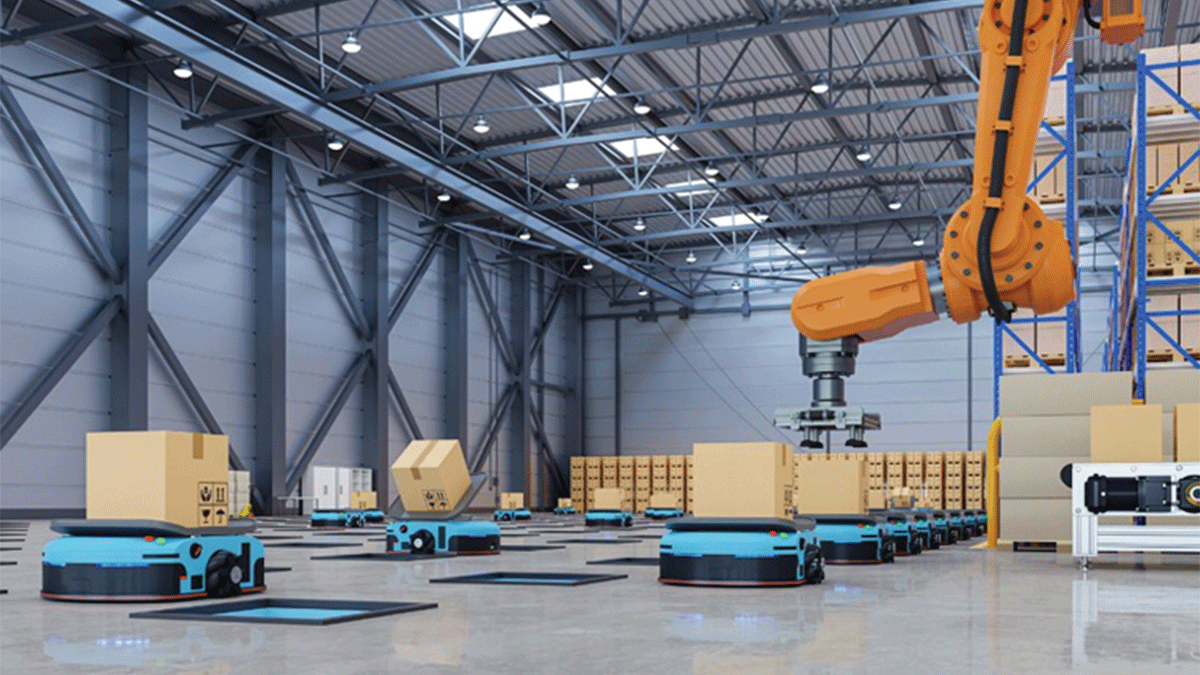
In the rapidly evolving landscape of manufacturing, automation has emerged as the linchpin of progress. Among the critical facets of this transformation are machine tending and materials handling—two indispensable pillars that directly influence productivity, quality, and safety in industrial environments. As the demand for increased throughput, operational efficiency, and workforce safety escalates, manufacturers are investing in smarter, more agile systems that integrate robotics, sensors, and intelligent software to handle tasks traditionally performed by human operators.
Machine tending refers to the automated or semi-automated process of loading and unloading materials into machines such as CNCs, injection molding units, or stamping presses. It often includes secondary processes such as part inspection, deburring, cleaning, and packaging. Meanwhile, materials handling encompasses the movement, protection, storage, and control of materials and products throughout manufacturing, warehousing, distribution, and disposal stages. Together, they constitute the backbone of a streamlined production system, enabling 24/7 operations with consistent accuracy and reliability.
The Rise of Automation
Traditionally, machine tending was a labor-intensive task, requiring human operators to repetitively load raw materials into machines, monitor operations, and unload finished components. While this approach worked for decades, it came with downsides—fatigue, inconsistencies, slow cycle times, and the ever-present risk of injury. As labor shortages became more acute and safety regulations more stringent, the industry turned to automation for answers.
The modern manufacturing facility now leverages robotic arms, gantry systems, automated guided vehicles (AGVs) , and collaborative robots (cobots) to handle machine tending tasks. These systems work in perfect synchrony with CNC machines, presses, grinders, and lathes, eliminating downtime and minimizing human error. Robots can be equipped with grippers or vacuum end effectors to pick up components, orient them correctly, and place them precisely into machines with sub-millimeter accuracy.
Cobots, in particular, have revolutionized small and medium-sized enterprises (SMEs) by offering a cost-effective, flexible solution that works alongside human workers. These robots are lightweight, easy to program, and safe to operate without fencing in many scenarios. They empower even low-volume, high-mix manufacturers to automate machine tending without significant capital investments.
Beyond Tending – Intelligence at Work
While the primary goal of machine tending is automation of repetitive tasks, the integration of smart technologies is elevating its capabilities. Cameras and vision systems now allow robots to “see” parts, adjust for variability in orientation or size, and inspect for defects. Artificial intelligence (AI) algorithms analyze sensor data in real-time to detect anomalies, predict maintenance needs, and optimize workflow.
For instance, an AI-enabled machine tending system can track tool wear or part rejection rates and automatically alert maintenance personnel or adjust machine parameters to ensure consistent quality. Such intelligent systems not only reduce scrap and rework but also help in better resource planning and inventory control.
Edge computing is another breakthrough enabling real-time decision-making at the shop floor level. Rather than sending data to the cloud, edge devices analyze data locally, resulting in faster response times and reduced bandwidth consumption. This is especially useful in high-speed production lines where milliseconds matter.
Smart Materials Handling – The Supply Chain Within the Factory
Materials handling has undergone an equally dramatic transformation. In a conventional setting, forklifts, pallets, and conveyors were the mainstays of intralogistics. While still in use, these systems are now being complemented or replaced by intelligent, autonomous solutions.
Automated Guided Vehicles (AGVs) and Autonomous Mobile Robots (AMRs) are leading this change. AGVs follow pre-defined paths using magnetic strips or wires embedded in the floor, while AMRs use sophisticated sensors, cameras, and AI to navigate dynamically through complex environments. These mobile robots transport raw materials, work-in-progress parts, and finished goods seamlessly across the facility, reducing manual labor and avoiding production bottlenecks.
Inventory management also benefits from automation. Real-time location systems (RTLS) using RFID tags and GPS tracking help manufacturers monitor inventory movement, predict stock outs, and ensure just-in-time delivery of materials to the production line. This tight synchronization between machine operations and material supply improves overall equipment effectiveness (OEE) and reduces downtime.
Additionally, warehouse automation solutions, including robotic picking arms and automated storage and retrieval systems (AS/RS), have significantly improved efficiency in distribution and warehousing processes. These systems can operate in tight spaces, retrieve items with pinpoint accuracy, and scale effortlessly with business growth.
Industrial Applications: Automotive, Aerospace & Electronics
In the automotive industry, where high-volume production and precision are critical, machine tending robots play a vital role in feeding and unloading CNC machining centers, stamping presses, and welding stations. Automated materials handling systems are employed to deliver components like engine blocks, axles, and gear assemblies to assembly lines just in time. This not only reduces lead times but also improves space utilization on the shop floor. The use of AGVs in transporting heavy car bodies and AMRs for kitting has become a standard practice in smart automotive plants.
In aerospace manufacturing, which demands intricate machining of high-value components, machine tending robots are used to handle exotic alloys and composite parts with exceptional care. Given the stringent quality and traceability standards, automated systems integrate advanced inspection tools that ensure parts meet tight tolerances. Materials handling in this sector often involves climate-controlled environments and cleanroom conditions—challenges that automation can manage more effectively than manual labor.
The electronics industry is another major beneficiary of automation in machine tending and material movement. Compact, delicate parts require gentle handling and high repeatability. Cobots and vision-guided pick-and-place systems are widely used to load PCB boards, place microchips, and handle soldered assemblies without damage. Automated handling solutions minimize human touch, reducing the risk of static discharge or contamination—crucial for maintaining product quality in semiconductor and consumer electronics manufacturing.
Safety and Ergonomics – A Human-Centric Approach
One of the primary drivers behind the automation of machine tending and materials handling is safety. Repetitive strain injuries, crush hazards, and exposure to hot or sharp materials are common risks in manual operations. Automation dramatically reduces these dangers by delegating hazardous tasks to robots. Furthermore, modern cobots are equipped with force and torque sensors that detect human presence and stop immediately upon contact, ensuring worker safety without the need for physical barriers. Ergonomics also improve, as employees are no longer required to lift heavy loads or stand for long hours, allowing them to focus on value-added tasks such as programming, maintenance, and quality assurance.
In essence, automation doesn’t eliminate jobs—it elevates them. Workers become supervisors of automated systems rather than manual laborers, requiring upskilling and cross-functional training. This shift enhances job satisfaction and opens up opportunities for career growth.
Challenges and Considerations
Despite its many benefits, automating machine tending and materials handling comes with its own set of challenges. Initial costs for robotics and automation equipment can be high, although the return on investment (ROI) is often realized within a few years through labor savings, increased uptime, and higher throughput.
Integration with existing systems is another hurdle. Legacy machines may not be easily compatible with modern robotic interfaces, requiring custom retrofitting or upgrades. Additionally, manufacturers must ensure that their staff are trained to operate, program, and maintain the new systems effectively.
Cybersecurity also becomes a concern as more systems become interconnected. Protecting manufacturing infrastructure from data breaches or malicious attacks is critical, especially when sensitive IP or proprietary production data is involved.
The Road Ahead
As the Fourth Industrial Revolution gathers pace, the fusion of robotics, AI, and data analytics will continue to redefine machine tending and materials handling. The focus will increasingly shift toward hyper-flexible systems that adapt in real-time to changing production needs, demand fluctuations, and custom configurations.
Digital twins virtual replicas of physical systems will allow manufacturers to simulate and optimize machine tending operations before actual deployment. Predictive analytics will minimize unplanned downtime, while cloud-based platforms will enable remote monitoring and control across geographies.
Sustainability is another emerging frontier. Automated materials handling systems can reduce energy consumption by optimizing routes and minimizing idle time. Likewise, precise machine tending reduces material waste and improves overall process efficiency, contributing to greener manufacturing practices.
Conclusion
Machine tending and materials handling are no longer just about automation—they are about intelligent, adaptable, and safe manufacturing. By embracing these technologies, manufacturers not only future-proof their operations but also build more resilient, scalable, and human-centric production environments. As industries strive for excellence in quality, speed, and customization, these systems will remain at the heart of modern manufacturing ecosystems, quietly powering the factories of the future.